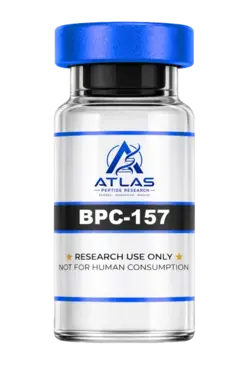
BPC-157
Body Protection Compound-157 (Pentadecapeptide)
At a Glance
Molecular Properties
Overview
Compound Description
BPC-157 is a synthetic pentadecapeptide consisting of 15 amino acids derived from a protective protein found in human gastric juice. It has been the subject of more than 100 peer-reviewed publications investigating its effects on tissue repair, angiogenesis, and cytoprotective signaling pathways in preclinical models. Research has focused on its potential roles in gastrointestinal mucosal integrity, connective tissue remodeling, and vascular recruitment mechanisms.
Mechanism of Action
Research-Identified Pathways
Preclinical studies suggest BPC-157 interacts with multiple biological pathways. Research indicates involvement with the nitric oxide (NO) system, where the peptide appears to modulate both constitutive and inducible NO synthase activity. Studies have also implicated upregulation of vascular endothelial growth factor (VEGF) and the FAK-paxillin signaling cascade, which are associated with fibroblast migration and proliferation.
Additional research points to interactions with the dopaminergic system, GABAergic pathways, and serotonergic signaling. In vascular models, BPC-157 has been investigated for its capacity to promote collateral vessel recruitment following experimental vessel occlusion in rodent studies. The peptide has also been studied for its effects on growth hormone receptor expression and its potential involvement in the NO-mediated cytoprotective cascade described by Robert's cytoprotection model.
Key Research Findings
Published Study Highlights
- Over 100 peer-reviewed preclinical publications investigating tissue repair mechanisms across tendon, ligament, muscle, bone, and gastrointestinal models
- Studies demonstrate upregulation of VEGF and growth factor expression in rodent wound healing models
- Research indicates modulation of the nitric oxide system and FAK-paxillin signaling pathways associated with fibroblast migration
- Investigated for cytoprotective effects on gastrointestinal mucosal integrity in preclinical gastric lesion models
- Studies in rodent models suggest promotion of collateral vessel recruitment following experimental vascular occlusion
Areas of Research Interest
Why Researchers Are Investigating This Compound
This compound has attracted significant research attention in the following areas. These represent active fields of scientific inquiry, not validated therapeutic claims. No medical benefits are stated or implied.
- Gut health and gastrointestinal repair: one of the most talked-about peptides in the gut health community, with researchers investigating its effects on intestinal lining integrity
- Tendon, ligament, and joint recovery: widely discussed among sports science researchers for its potential role in connective tissue repair pathways
- Injury recovery and tissue healing: interest has grown around its broad cytoprotective properties observed across multiple tissue types in preclinical models
- Neuroprotective research: emerging preclinical studies have sparked interest in its interactions with dopaminergic and serotonergic systems
Published Research
Peer-Reviewed References
- Seiwerth S, Brcic L, Vuletic LB, et al. "Stable Gastric Pentadecapeptide BPC 157 and Wound Healing." Frontiers in Pharmacology (2021). doi:10.3389/fphar.2021.627533
- Seiwerth S, Brcic L, Vuletic LB, et al. "BPC 157 and blood vessels." Current Pharmaceutical Design (2014). doi:10.2174/13816128113199990421
- Sikiric P, Seiwerth S, Rucman R, et al. "Stable gastric pentadecapeptide BPC 157-NO-system relation." Current Pharmaceutical Design (2014). doi:10.2174/13816128113190990411
- Seiwerth S, Rucman R, Turkovic B, et al. "BPC 157 and standard angiogenic growth factors: gastrointestinal tract healing, lessons from tendon, ligament, muscle and bone healing." Current Pharmaceutical Design (2018). doi:10.2174/1381612824666180712110447
- Sikiric P, Rucman R, Turkovic B, et al. "Novel cytoprotective mediator, stable gastric pentadecapeptide BPC 157: vascular recruitment and gastrointestinal tract healing." Current Pharmaceutical Design (2018). doi:10.2174/1381612824666180608101119
Research Use Only
The information presented on this page is compiled from peer-reviewed scientific literature and is provided solely for educational and research purposes. This compound is intended exclusively for laboratory and scientific research use. It is not a drug, pharmaceutical, or dietary supplement. It is not intended to diagnose, treat, cure, or prevent any disease or medical condition. No claims of therapeutic efficacy are made or implied.
Researchers are advised to consult the original published studies referenced above for complete methodological details, study limitations, and the authors' own conclusions. Atlas Peptide Research does not endorse any specific research application and provides this information as a reference resource only.
Interested in BPC-157?
View this compound in our shop to see available sizes, certificates of analysis, and current pricing.
View in Shop